Timber is one of the most important elements in your project budget, whether you are overseeing a large-scale residential construction, carrying out an architectural renovation, or constructing an outdoor deck. Your choice of wood quality has a direct effect on the build’s lifetime, aesthetic appeal, and structural soundness. Finding a trustworthy timber partner, however, requires looking past flimsy pricing bids.
You need a partner who understands Australian timber standards, maintains a consistent inventory, and provides customised services for commercial and trade consumers to keep your project on track and on budget. Choosing a timber supplier starts with asking the right questions before you place your first order.
This practical timber yard checklist outlines the 10 essential questions every builder, contractor, and renovator must ask, along with guidance on securing a timber trade account to support your ongoing projects.
Why Selecting the Right Timber Supplier Matters
Wood responds to climate, moisture, and structural stresses since it is a biological material. Low-quality, improperly stored, or uncertified wood can result in early fungal decay, warping, splitting, or major structural failure.
Working with an established timber distributor like JVS Timber ensures every piece of timber-from structural F17 hardwood to exterior decking boards and interior flooring-complies with strict industry standards for strength and durability. The right supplier serves as a technical advisor, helping you select species that deliver peak performance for specific environmental requirements.
10 Questions to Ask Your Timber Supplier
1. Are Your Timber Products Certified and Compliant with Local Building Standards?
Structural safety is non-negotiable in construction. Before ordering timber for framing, joists, or load-bearing applications, confirm that the supplier provides certified structural timber.
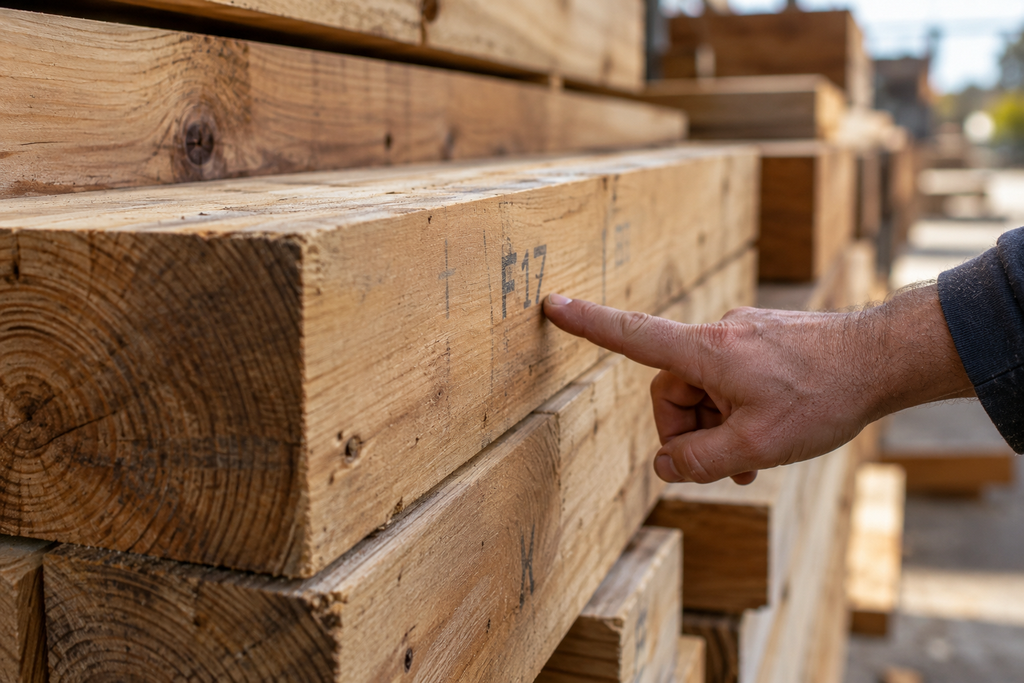
Find out if their engineered, hardwood, plywood, and formply products meet the applicable Australian standards (e.g., AS/NZS 2269 for structural plywood or AS 1684 for residential timber-framed construction). In order to provide builders with peace of mind during building inspections and sign-offs, suppliers pledged to source only from certified makers.
2. What Range of Timber Species, Sizes, and Profiles Do You Keep in Stock?
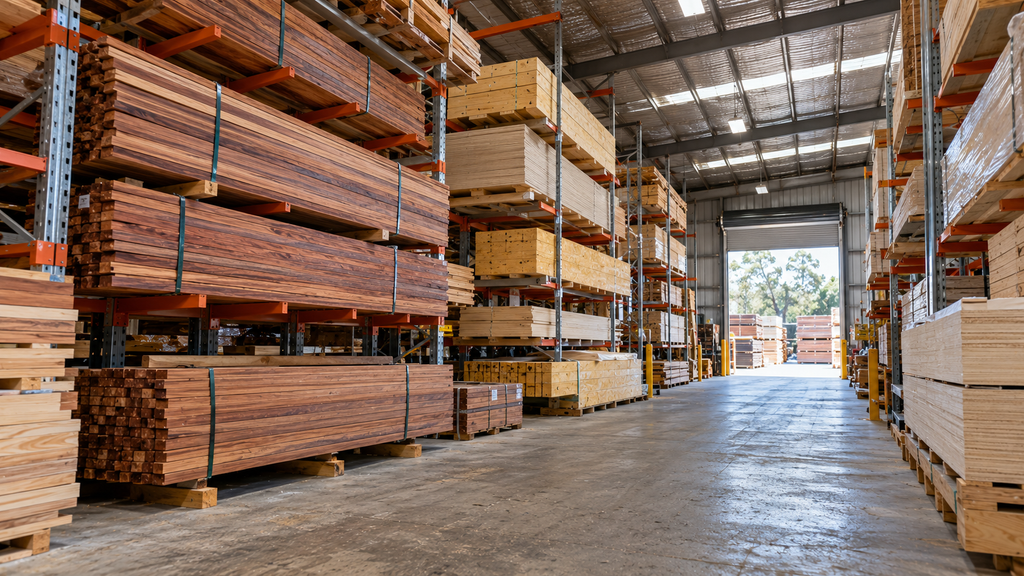
Certain dimensions and types of wood are required for any construction job. You are forced to purchase products from other vendors when a supplier has a limited inventory, which increases administrative expenses and causes delivery delays.
Inquire about the depth of their range:
- Decking & Landscaping: Hardwood species such as Spotted Gum, Blackbutt, Jarrah, and Karri.
- Flooring: Solid hardwood and overlays in species like Tasmanian Oak, Messmate, Wormy Chestnut, and Southern Ash.
- Structural & Formwork: F17 KD Hardwood, F11 Structural Plywood, Marine Plywood, F17 Formply, OSB Bracing, JVS LVL10, and JVS LVL14.
- Joinery & Fencing: Select grade hardwoods for custom cabinetry, stair treads, benchtops, and mixed red hardwood posts.
You may bundle orders effectively with a thorough inventory, guaranteeing visual uniformity between species and finishing characteristics.
3. How Do You Ensure Moisture Content and Timber Stability?
Excessive moisture causes wood to shrink, twist, or bend while it dries on-site, which can result in misaligned door frames, creaky flooring, or broken plasterboard.
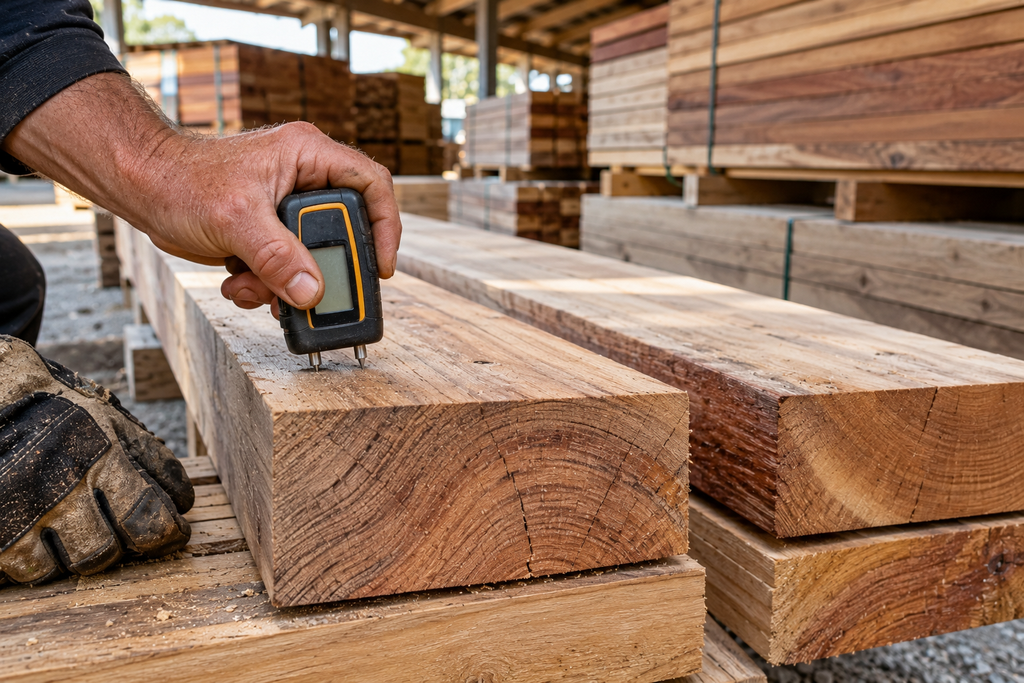
Find out from your supplier how they season and store their wood. Kiln-dried (KD) hardwoods are crucial for interior joinery, structural framing, and high-end hardwood flooring because they provide better dimensional stability than green timber. Before shipping, make sure the timber yard keeps boards off the ground under cover to protect them from extreme weather.
4. What Are Your Lead Times and Stock Availability Guarantees?
Material shortages are a major cause of construction delays. A failure to deliver framing timber or structural LVL on time stalls sub-contractors and inflates holding costs.
Find out from the supplier how they keep inventory on hand. Do they depend on backorders, or do they maintain a steady warehouse stock of essential products? Reliable suppliers guarantee timely delivery for large orders by keeping sizable stock reserves in important trade profiles.
5. Do You Offer Trade Pricing, Volume Discounts, and Dedicated Trade Accounts?
For builders, contractors, and developers, profit margins rely on securing competitive rates for bulk timber purchases.
Ask about opening a timber trade account. Trade accounts make buying easier, offer tiered volume discounts, simplify tax invoicing and provide flexible payment terms. By working with a trade-focused distributor, you can access wholesale rates that will make your tenders competitive without compromising the quality of the timber.
6. What Are Your Site Delivery Capabilities and Service Coverage?
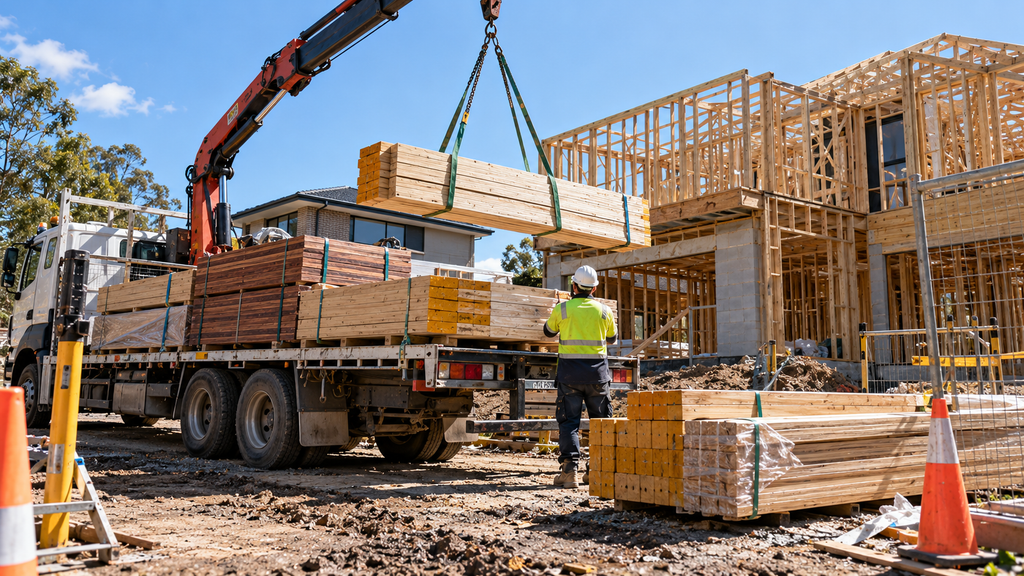
Reliable transport logistics are needed to move long LVL beams, structural hardwood packs or sensitive flooring boards.
Ask about the supplier’s delivery logistics:
- What are their service territories?
- Are there on-site transport options to access closed residential streets or tight commercial sites?
- How are deliveries scheduled (i.e. fixed drop-off windows)?
A supplier capable of delivering directly to job sites across regional hubs and major cities saves your crew from wasting hours picking up materials.
7. How Are Timber Products Graded for Appearance and Structural Integrity?
Visual appearance and load-bearing capacity are factors in timber grading. Misreading grades leads to the use of decorative timber for structural purposes, or the fitting of feature-grade boards where a clean, select finish is required.
Ask how their timber products are classified:
- Structural Grading: Ratings like F11, F17, and F22 indicate bending strength and stiffness.
- Appearance Grading: Select Grade has a uniform appearance with minimal natural characteristics, Standard Grade offers a balance of features and uniformity, and Feature/Wormy Grade displays natural gum veins, sapwood and insect trails.
A clear understanding of timber grading ensures you order the exact specification required for every part of your build.
8. Where Is Your Timber Sourced, and Is It Sustainable?
Environmental responsibility is top of mind for clients, architects, and government regulations. Sourcing timber from responsibly managed forests ensures natural resources are conserved and ecosystems are protected.
Ask the supplier if the timber comes from a certified producer. Reputable Australian suppliers only buy from certified timber mills that follow sustainable forestry management guidelines.
9. What Level of Technical Support and Industry Expertise Do You Provide?
Selecting timber involves complex decisions regarding durability classes, BAL (Bushfire Attack Level) ratings, fixing methods, and timber maintenance.
A normal order taker will not tell you if there is a potential problem with your spec. Find a supplier that has staff who are very knowledgeable about the industry. Experienced sales professionals save time and prevent costly design changes by helping select bushfire-resistant timbers such as Spotted Gum and choosing the right LVL beam span.
10. How Do You Handle Quality Returns, Replacements, or Defective Materials?
Natural wood may contain hidden defects or shipping damage, even with the most stringent quality controls. The real measure of a timber supplier is how they handle problems when they occur.
Ask about their returns and exchange policy:
- How quickly do they inspect and replace damaged or out-of-spec boards?
- What is the procedure for handling site returns?
Defective stock issues won’t ever cause your site work to be delayed thanks to our open, customer-first exchange policy.
Your Quick Timber Yard Checklist
Keep this summary checklist close at hand for when you are evaluating potential timber partners during yard visits or sales meetings:
- Product Certification: Verified compliance with Australian structural and durability standards.
- Inventory Depth: Full selection of hardwoods, plywood, LVL, flooring, and decking profiles.
- Storage Quality: Kiln-dried timber stored under cover and protected from ground moisture.
- Trade Services: Dedicated timber trade account option with volume discounts.
- Reliable Logistics: Direct site delivery with flexible scheduling.
- Technical Knowledge: Expert team capable of answering structural and species selection queries.
The JVS Timber Advantage
Choosing the right timber partner is about building a relationship that supports long-term business growth. At JVS Timber, we supply premium Australian hardwoods, structural plywood, engineered LVL, and decking boards designed to perform in all climate conditions.
We work with certified producers and have a large warehouse inventory to help trade contractors, home builders, and commercial developers complete projects on time and on budget with high quality. Whether you need a truckload of framing supplies or just a few pieces of grade hardwood for architectural joinery, our staff can provide low prices and reliable site delivery.
Ready to simplify your timber procurement? Contact the JVS Timber team today to request a quote or set up a dedicated trade account.
What is the benefit of opening a timber trade account?
Opening a timber trade account allows licensed builders, contractors and tradies to enjoy wholesale pricing, volume discount programs and streamlined ordering. Trade accounts also simplify project accounting by offering monthly billing and custom credit terms to assist with project cash flow.
How do I know whether to choose solid hardwood or engineered timber like LVL for structural support?
Solid hardwood has good natural strength, durability and a traditional look, making it appropriate for exposed post-and-beam structures or exposed exterior frameworks. Engineered timber, such as JVS LVL ( Laminated Veneer Lumber ), is the preferred material for internal framing, headers, and structural beams because of its uniform strength, consistent straightness at long lengths, and low dimensional movement.
What is the difference between kiln-dried (KD) and green timber?
Kiln-dried (KD) timber is dried in controlled kilns to reduce the moisture content to standard indoor levels (usually 10%–15%). The process reduces shrinkage, warping and twisting after installation. Green timber contains high natural moisture and will dry in situ over time, which can cause dimensional movement. KD timber is strongly recommended for structural framing, joinery and flooring.
Which hardwood species are best suited for outdoor decking in Australia?
Australian hardwoods like Jarrah, Karri, Blackbutt and Spotted Gum are perfect for outdoor decking. They are suitable for bushfire-prone locations because of their high density, good natural resistance to termites and fungal degradation and excellent fire endurance ratings.
How can I verify that the timber I purchase comes from sustainable sources?
Selecting a supplier who only purchases from recognised timber producers will allow you to verify sustainability. Strict forest management regulations are followed by certified producers to guarantee that harvested trees are replanted, biodiversity is preserved, and timber harvesting maintains long-term ecological balance.
