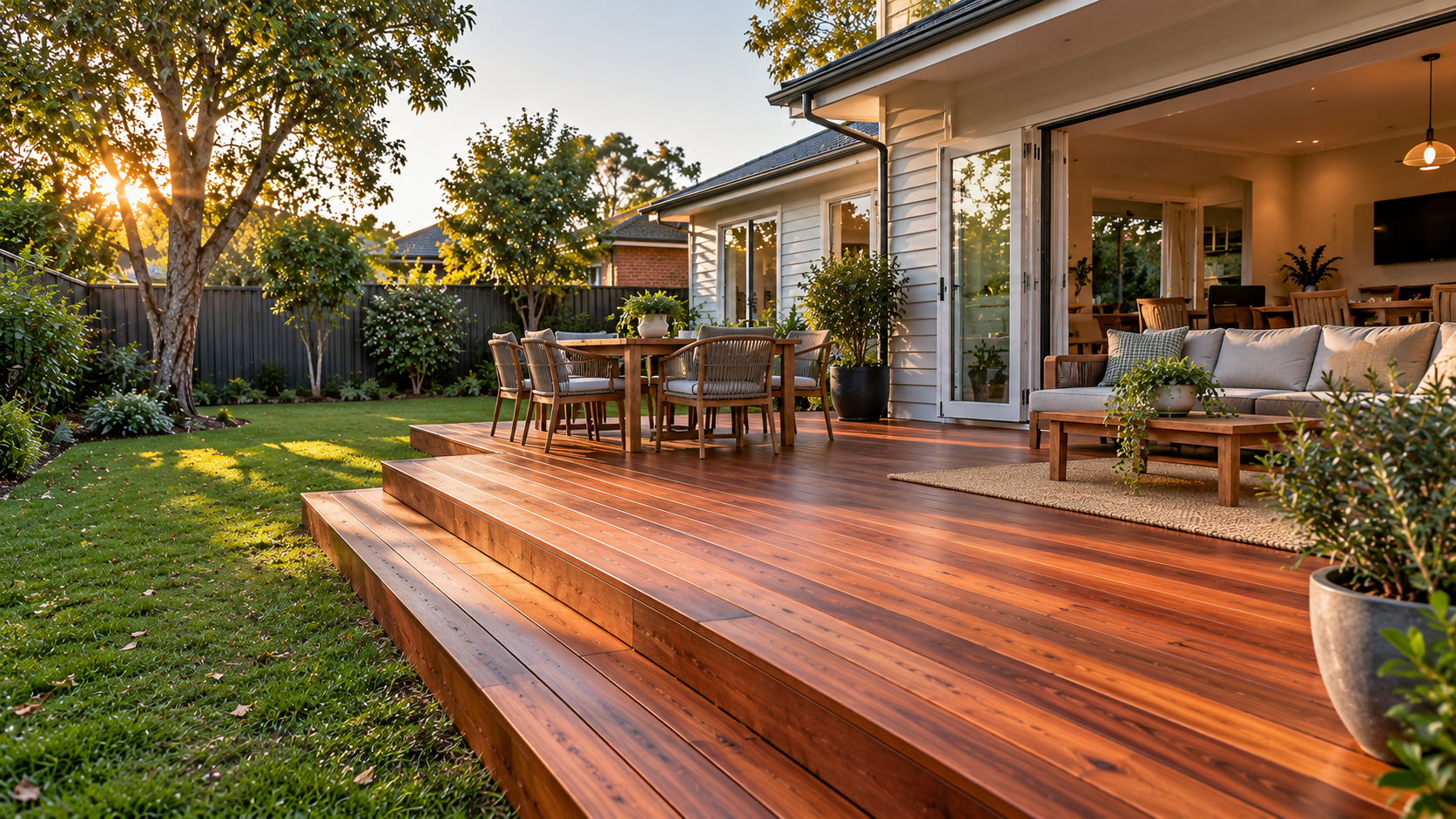
An outdoor deck is a valuable extension of any Australian home, providing a seamless transition between indoor living areas and garden spaces. Choosing the correct material is crucial to creating a long-lasting outdoor space, whether you are building a large entertainment deck, a small patio platform or a poolside element.
When planning a build in Victoria, choosing the best timber for decking requires careful consideration of local weather patterns. Melbourne is famous for experiencing four seasons in one day—ranging from intense UV radiation and soaring summer heat to heavy winter rains, frost, and sudden temperature drops.
Rapid climate changes put tremendous physical stress on natural wood, causing low-quality materials to swell, shrink, warp or split. Selecting a durable, high-performing decking timber is key to ensuring your deck remains structurally sound, safe and visually appealing for decades to come.
In this tutorial, we examine how Melbourne’s environment affects outdoor wood constructions, go over the best hardwood decking species that JVS Timber offers, and provide important design and upkeep guidelines to extend the life of your deck.
Understanding the Challenges of Melbourne’s Climate
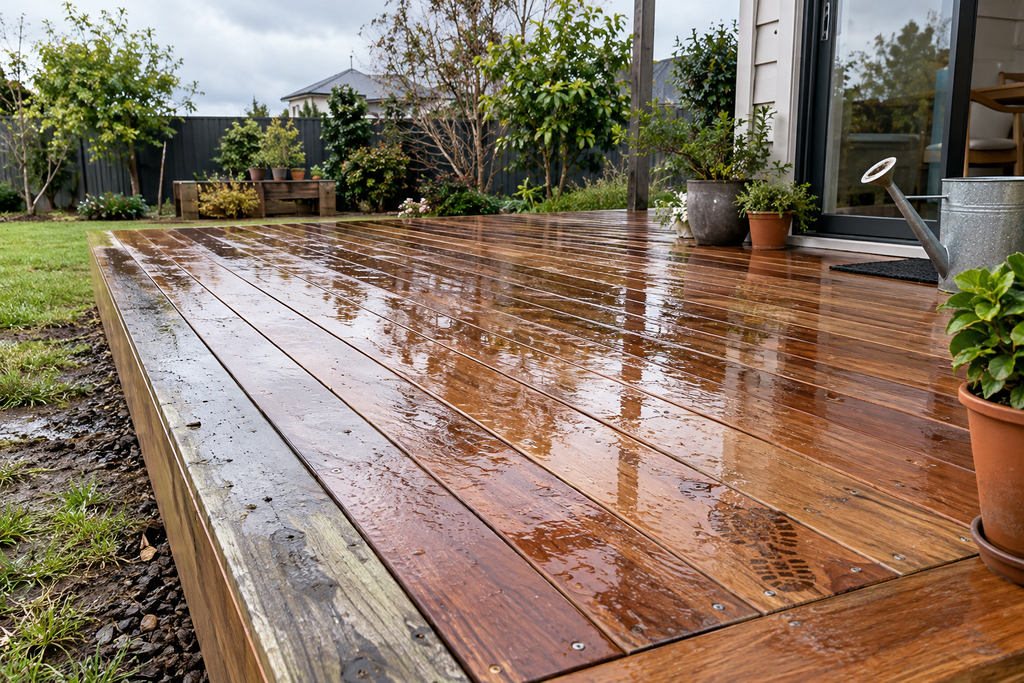
When building an outdoor deck in Melbourne, considerable environmental exposure must be considered. When natural wood absorbs moisture from the atmosphere, it expands; when it dries in the hot sun, it contracts. If the selected wood has low natural density and stability, frequent cycles of soaking and drying can cause internal stress in the wood fibres, which can result in cupping, checking, and surface cracking.
Key climate factors affecting outdoor timber decks in Victoria include:
- High UV Exposure: Surface timber lignin is broken down by intense summer sunlight, which increases surface drying and causes unsealed wood to weather to a silver-grey hue.
- Rapid Thermal Expansion and Contraction: Quick temperature swings throughout autumn and spring test board fastenings and sub-frame connections.
- Winter Moisture and Dampness: Prolonged wet conditions during winter months raise the risk of surface mould, algal growth, and fungal decay in non-durable timbers.
- Bushfire Attack Level (BAL) Requirements: To adhere to local bushfire building requirements, many residential areas in Melbourne’s peri-urban and outer suburbs must use fire-resistant timber species.
Choosing a timber species with high natural durability and density protects your investment against these climate demands.
Top Hardwood Decking Species for Melbourne Homes
Australian hardwoods are well known across the world for their remarkable strength, density, and inherent resistance to fire, termites, and rot. Purchasing kiln-dried hardwood decking boards from a reputable distributor guarantees that each board will provide dimensional stability in a variety of weather scenarios.
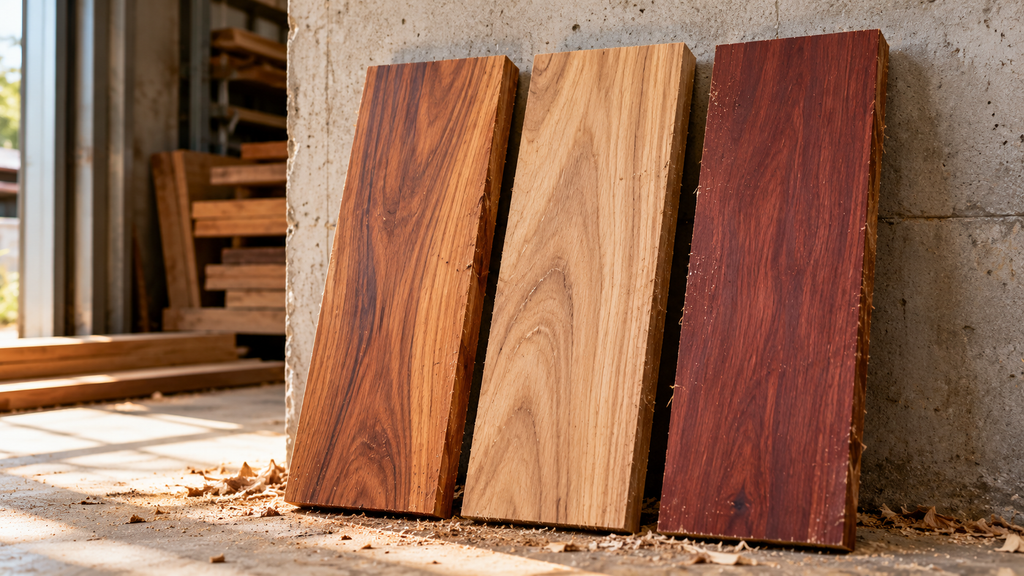
Here are the top hardwood species recommended for outdoor decks across Victoria.
1. Spotted Gum
Spotted Gum is widely considered one of Australia’s premier timber species for outdoor construction. Grown in coastal regions along the east coast, Spotted Gum features a rich, striking aesthetic with colors ranging from pale straw and soft chocolate browns to deep reddish tones.
- Density and Strength: Exceptionally high density and structural hardness provide outstanding resistance to impact, heavy foot traffic, and mechanical wear.
- Dimensional Stability: Minimal movement when exposed to changing humidity makes Spotted Gum ideal for Melbourne’s variable weather.
- Fire Resistance: Naturally meets Bushfire Attack Level requirements up to BAL 29 without requiring chemical flame retardants, making it an excellent choice for outer suburban and bushland builds.
- Natural Grain Characteristics: Features attractive wavy grain patterns, subtle gum veins, and fiddleback markings that give every deck a unique custom finish.
2. Blackbutt
Another premium native Australian hardwood that is preferred by builders, architects, and homeowners looking for a cosy, contemporary style is blackbutt. It illuminates outdoor gathering areas with its continuous mild golden-brown to cream colour range.
- Aesthetic Appeal: Straight and clean grain lines and uniform colour tones fit well into the design of modern homes.
- Structural Performance: High structural rating and natural density offer strong protection against indentation, scratching, and weather exposure.
- Fire Durability: Naturally fire-resistant and certified for use in BAL 29 areas.
- Finishing Versatility: It’s easy to keep its natural timber colour with the ability to take clear oils, pigmented stains and protective coatings.
3. Jarrah
Jarrah, a timber from Western Australia, is well-known for its rich, deep red hues that turn into rich burgundy tones as it ages. It provides a timeless luxury look for both conventional and contemporary homes.
- Weather Resistance: High natural oil content provides outstanding protection against moisture penetration, rot, and fungal decay.
- Natural Termite Resistance: Naturally resistant to insect attacks without requiring artificial chemical treatments.
- Longevity: Dense heartwood properties ensure a long service life in exposed outdoor settings when maintained regularly.
4. Merbau
Merbau is a popular imported hardwood used extensively in Australian home building. Merbau is a tough, cheap hardwood that has a deep reddish-brown colour and small flecks of yellow mineral throughout the wood.
- High Natural Durability: Performs reliably in high-moisture outdoor environments.
- Stability: Holds its shape well with minimal twisting or checking when seasoned properly.
- Tannin Management: Merbau has natural water-soluble tannins which leach out during the first rain and need to be washed thoroughly, prepared and then sealed.
5. Ironbark
Ironbark’s strength and structural durability are unmatched. This red and grey ironbark heavy-density hardwood is made to endure severe weather and continuous use.
- Maximum Durability: Classified as a Class 1 durability timber, giving it superior natural defense against decay and termites.
- High Fire Rating: Suitable for high bushfire exposure areas (up to BAL 29).
- Robust Surface: Extremely resistant to splintering, scratching, and surface wear, making it an ideal candidate for commercial boardwalks and high-use family decks.
Softwood Alternatives: Treated Pine Decking
Hardwoods in their natural state dominate the luxury market, but treated pine is still a popular choice for outdoor platforms, screen panels and backyard decks, and is more affordable.
- H3 Preservative Treatment: Chemically treated to protect against fungal rot, decay, and termite attacks in above-ground exterior applications.
- Cost Efficiency: Lower material cost per board offers an accessible option for cost-conscious renovations.
- Custom Color Options: Lightweight and easy to paint or stain in any color scheme to match house trims and garden fencing.
Because softwoods are less dense than hardwoods, treated pine decking requires regular sealing and maintenance to prevent surface checking and moisture absorption over time.
Key Factors to Consider When Selecting Your Decking Timber
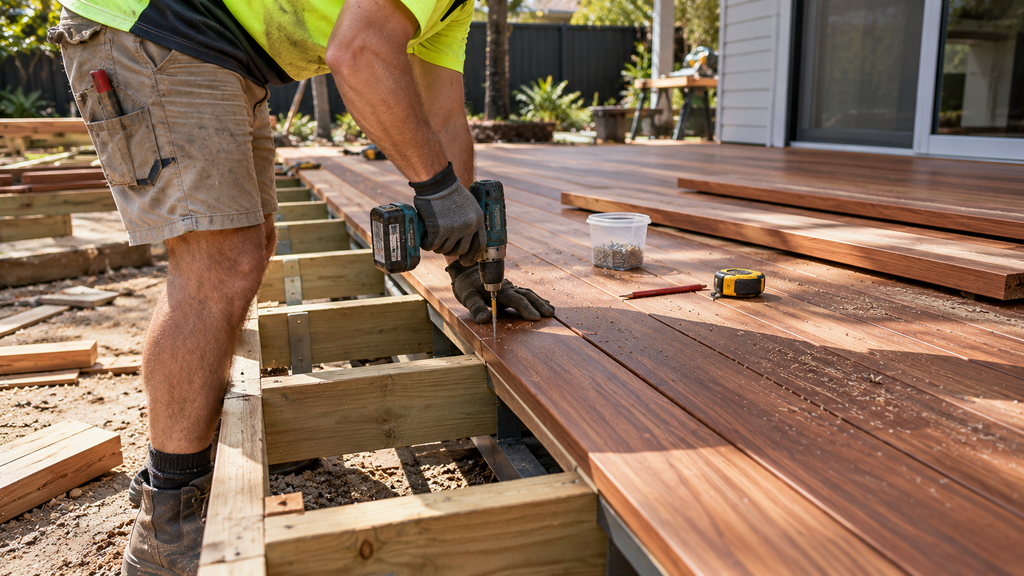
Keep these practical factors in mind when designing your deck build, as well as colour preference:
1. Board Dimensions and Widths
Decking boards are available in several common width profiles:
- Standard Widths: Narrower boards allow moisture to drain quickly between joists, reducing cupping risks in damp sub-floor conditions.
- Wide Profiles: Wider boards create a spacious, high-end architectural finish with fewer visible board join lines across large deck areas.
2. Kiln-Dried (KD) vs. Unseasoned Timber
Always go with kiln-dried (KD) hardwood decking boards. In a controlled environment, kiln drying is used to bring the moisture content of wood to a stable level. This stage minimises joint separation, board twisting and shrinkage post on-site installation.
3. Sub-Frame Ventilation and Drainage
Even the best grade timber decking will break down prematurely if moisture gets trapped under the deck. Make sure your deck frame has enough clearance from the ground, enough airflow under the sub-floor, and slight drainage slopes so moisture doesn’t get trapped under your hardwood boards.
4. Fastenings and Fixings
Select high-grade stainless steel or hot-dipped galvanized deck screws to prevent rust staining and structural failure. Pre-drilling screw holes in dense hardwoods like Spotted Gum and Ironbark prevents end-splitting and ensures clean counter-sinking.
Essential Timber Maintenance for Lasting Beauty
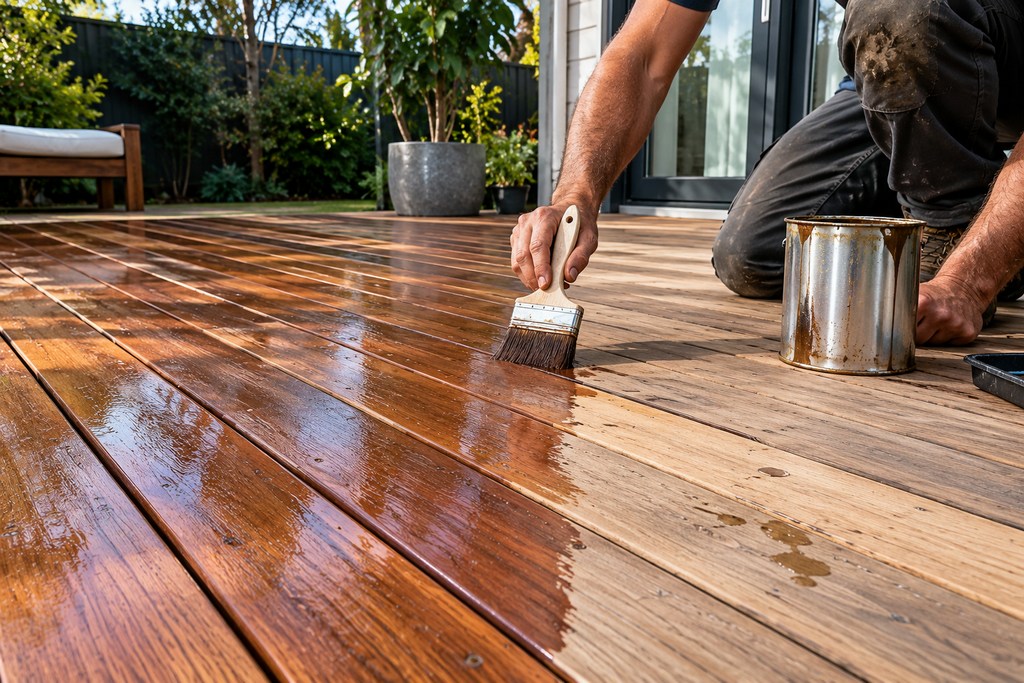
Protecting your outdoor timber investment against Melbourne’s unpredictable weather requires straightforward, ongoing care:
- Initial Weathering and Washing: Let new timber boards settle and leach any excessive surface oils or natural tannins before final sealers are applied.
- Quality Sealing: Apply high-quality oil-based or water-based penetrating deck oils to seal wood pores against water entry and harmful UV rays.
- Regular Cleaning: Sweep away leaves, dirt, and debris regularly to stop surface moisture traps and algae growth.
- Re-Coating Schedule: Re-apply protective deck oil every 12 to 18 months, or as soon as water stops beading on the board surface.
Build Your Outdoor Vision with JVS Timber
Choosing the right decking material sets the foundation for a durable, beautiful outdoor entertaining space. At JVS Timber, we supply premium Australian hardwoods, structural pine, and engineered framing timber suited to Victoria’s climate demands.
We supply high-quality Spotted Gum, Blackbutt, Jarrah, Ironbark, Merbau and treated pine decking direct to your job site, working with builders, carpenters, landscapers and homeowners. From a small residential patio to a large commercial deck, we offer expert technical advice, competitive pricing and reliable material delivery.
Contact JVS Timber today to request a quote or speak with our timber specialists about your project requirements.
What is the best timber for a deck in a bushfire-prone area in Melbourne?
Hardwood species such as Spotted Gum, Blackbutt and Red Ironbark are naturally fire resistant and are approved for use in areas rated up to Bushfire Attack Level (BAL) 29. These dense Australian hardwoods meet the stringent fire safety requirements and require no extra chemical treatments.
How often should I oil my hardwood deck in Victoria?
In Melbourne’s climate, outdoor timber decks should typically be oiled or re-sealed every 12 to 18 months. Decks exposed to full sun or heavy rain may benefit from annual maintenance. A quick way to test if your deck needs re-oiling is to splash water on the surface; if the water absorbs instead of forming beads, it is time to re-seal.
What is the difference between Spotted Gum and Blackbutt decking?
Both are dense, highly durable Australian native hardwoods rated for BAL 29 bushfire areas. The main difference lies in visual appearance: Spotted Gum features rich colour variations ranging from light chocolate to reddish-browns with vivid grain markings, while Blackbutt provides a lighter, pale golden to cream palette with uniform grain.
Why do timber decking boards bleed tannins, and how do I manage it?
Hardwood has naturally occurring chemical compounds called tannins which dissolve in water. As new decking becomes exposed to rain, such tannins will leach out and temporarily discolour adjacent asphalt or concrete. To prevent tannin bleed, remove excess surface oil with a timber prep cleaner before applying a penetrating sealer.
Can I install timber decking directly over a concrete slab?
Yes, but you have to make sure that there is enough ground separation, drainage clearance, and sub-deck ventilation. It is never advisable to attach decking boards directly to concrete. To establish an air gap that lets moisture drain away and stops board cupping or wood deterioration, use treated joists or movable deck pedestals.
