Budgeting for wood is one of the most important aspects when organising a building project, remodelling a house, or improving outdoor life. Knowing timber pricing is crucial for staying within your budget, whether you’re building a large outdoor entertainment deck, installing custom hardwood flooring, or erecting a multi-story house.
If you are sourcing materials in Victoria, keeping up with timber prices Melbourne builders and tradies encounter requires looking at several core drivers across the supply chain. Timber is a natural commodity, and its pricing per linear metre or square metre fluctuates based on raw material availability, processing demands, species scarcity, and local transport logistics.
In this in-depth guide, we break down the key variables influencing timber prices in 2026, describe how specific product categories are priced, and show you how making wise purchases will help you get the most out of your next project with JVS Timber.
The Landscape of Timber Pricing in 2026
The Australian building industry continues to place high demand on structural and architectural timber. With an ongoing focus on sustainable, carbon-neutral building materials, timber remains the material of choice for residential framing, exterior decking, joinery, and cladding.
However, calculating the total material cost of a build involves more than looking at a single price tag. Timber is quoted in different ways depending on its application:
- Linear Metre Pricing: Used for structural timber, structural LVL beams, joists, bearers, posts, and individual decking boards.
- Square Metre Pricing: Applied to continuous surfaces like hardwood flooring, sheet goods, structural plywood, formply, and complete decking coverage.
To understand why a particular piece of timber carries its given price point, it helps to examine the underlying factors that determine timber market rates across Melbourne and the broader Australian market.
5 Major Factors That Influence Timber Costs
1. Timber Species and Natural Availability
The natural abundance and growth cycle of a tree species directly dictate its market cost.
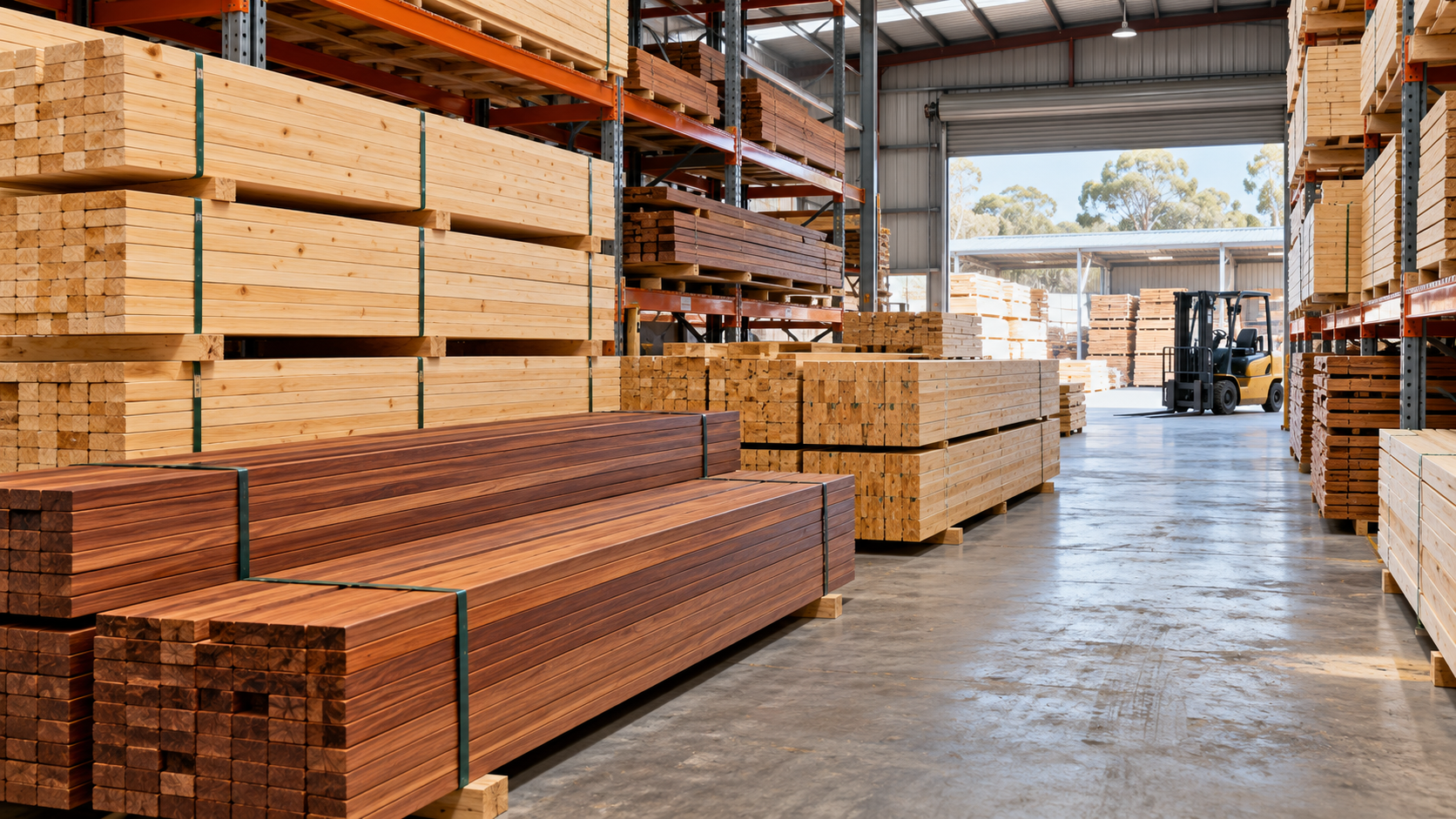
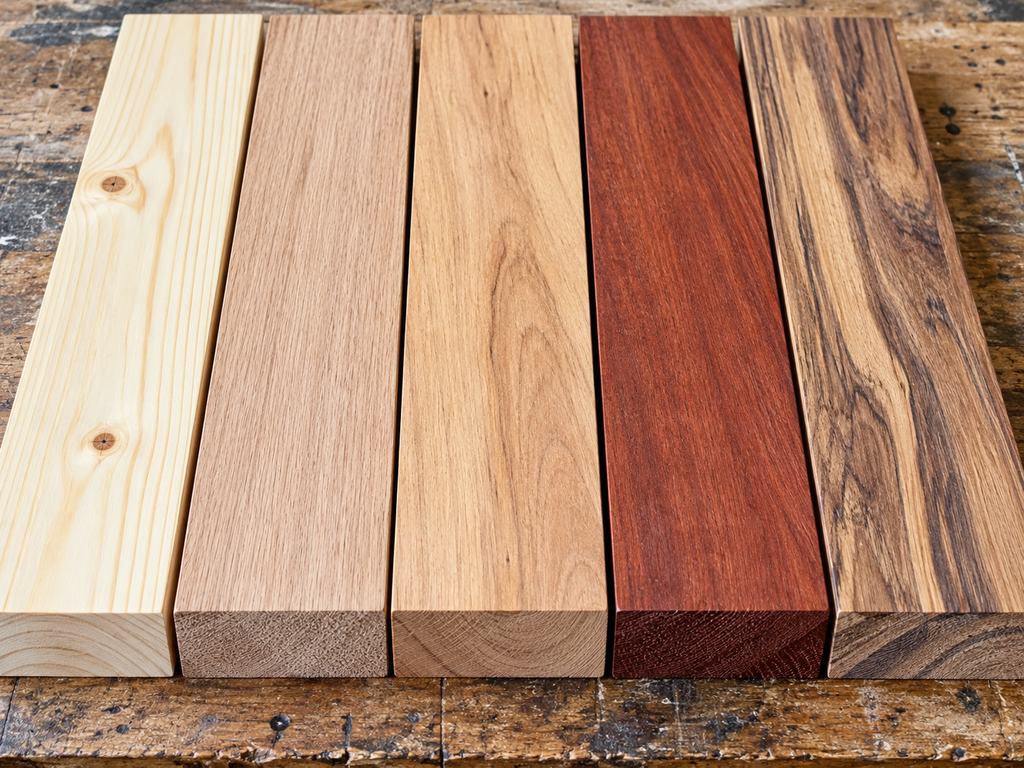
Softwoods, such as radiata pine, grow rapidly and are harvested in high volumes from sustainable plantations. This makes them highly affordable for internal framing and general construction.
On the other hand, native Australian hardwoods, such as Tasmanian Oak, Blackbutt, Jarrah, Ironbark, and Spotted Gum, require decades to mature. They are in great demand for high-end decking, solid hardwood flooring, and architectural posts because of their natural density, rich colour variations, and remarkable durability. The price per metre of hardwood reflects the higher value and natural scarcity of these premium woods because supply is tightly controlled to preserve native forests.
2. Timber Grade and Visual Quality
Timber is rated based on both its aesthetic appeal and structural strength. You can avoid paying for ornamental finishes when simple structural lumber is all that is needed by being aware of these grading schemes.
- Structural Grading: Ratings such as F11, F17, and F22, or stress grades like MGP10 and MGP12, measure the load-bearing capacity and stiffness of the wood. Higher structural grades require rigorous stress testing and selection, which increases the price per metre.
- Appearance Grading: Timber is divided into Select Grade, Standard Grade, and Feature or Character Grade for visible uses such as joinery, flooring, and benching. Select Grade is the most expensive category since it has few natural markings and a neat, consistent appearance. Feature Grade offers a rustic look at a lower cost per meter and features bug trails, spiral grain, and natural gum veins.
3. Processing, Kiln Drying, and Seasoning
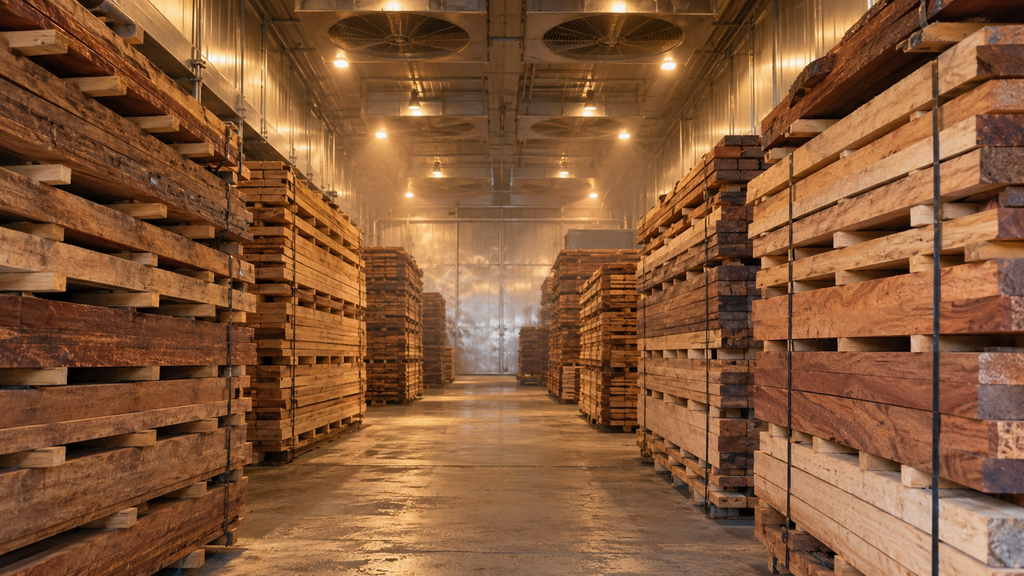
Freshly harvested timber contains high levels of moisture. If unseasoned timber is installed directly into a building, it will shrink, bow, twist, and split as it dries naturally.
Quality timber is kiln-dried (KD) to guarantee dimensional stability. For weeks, timber packs are kept in temperature-controlled kilns until the interior moisture content reaches acceptable levels. The ultimate cost per meter is increased by the substantial energy and kiln area needed for kiln drying. But by purchasing kiln-dried hardwood or pine, builders can avoid future warped decking, broken plasterboard, and expensive structural repairs.
4. Treatments and Protective Finishes
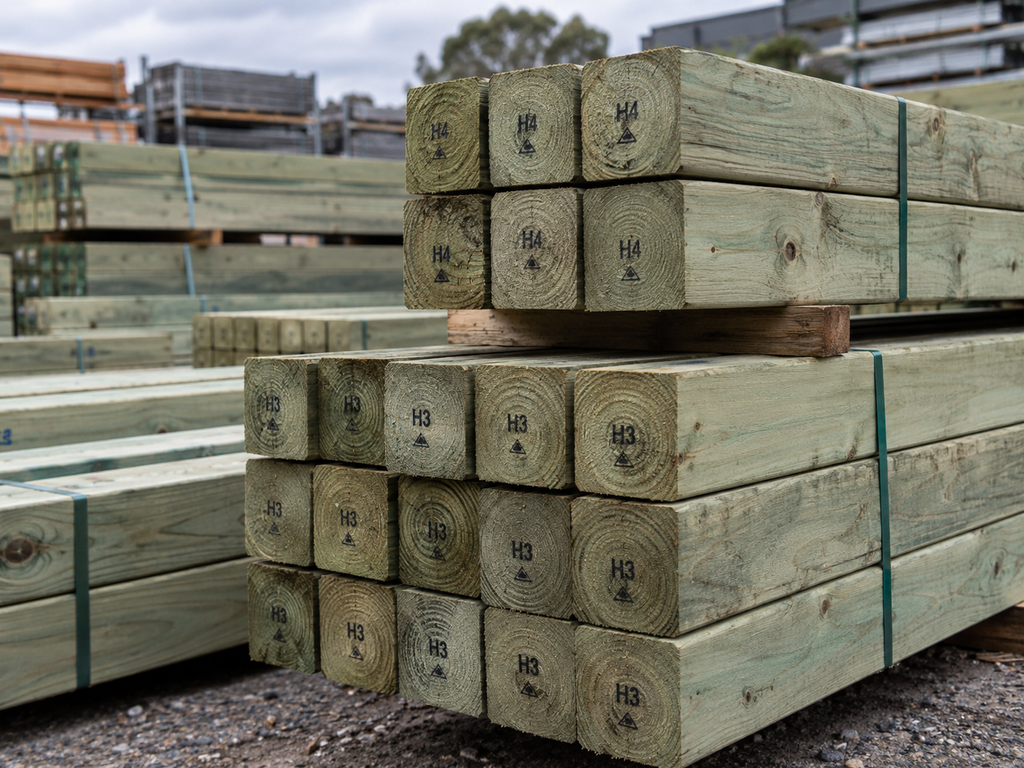
To avoid rot and termite damage, outside wood exposed to moisture, soil contact, or insect activity needs to be treated.
- H2 Treatment: Protects internal structural timber against termites and borers. It is an affordable addition for house framing.
- H3 Treatment: Formulated for above-ground exterior applications, such as deck sub-frames, pergola rafters, and exterior cladding exposed to weather.
- H4 and H5 Treatment: Engineered for in-ground contact or severe wet soil environments, such as fence posts, retaining walls, and structural stumps.
The chemical treatment process, vacuum-pressure chamber cycles, and post-treatment drying add processing steps that increase the overall cost compared to untreated timber.
5. Milling, Machining, and Profile Complexity
Simple sawn timber straight from the mill is the most economical form of timber. Once timber undergoes additional machining-such as dressing all four sides smooth, tongue-and-groove profiling for flooring, pencil-rounding edges for decking, or custom pencil profiling for architectural cladding-the cost per metre increases.
Complex profiles necessitate more material waste during the milling process, slower feed rates, and specialised tools. In comparison to off-the-shelf standard profiles, custom orders or non-standard dimensions will inevitably cost more.
Breaking Down Costs Across Key Timber Categories
To give you a clearer picture when compiling your bill of quantities or project estimate, let us look at how these factors apply across specific product categories.
Structural Timber and Engineered Beams
The foundation of any building is structural lumber. For wall framing, roof trusses, and floor joists, fast-growing softwoods and engineered timber products provide excellent strength-to-weight ratios.
Engineered products like Laminated Veneer Lumber (LVL)-such as JVS LVL10 and JVS LVL14-are manufactured by bonding thin wood veneers under heat and pressure. Longer spans, fewer support posts, and zero warping are all made possible by LVL’s better structural strength, which eventually reduces overall framing labour and installation time even if it costs more up front in linear meters than conventional pine studs.
Exterior Decking
When calculating your overall decking cost per m2, it is vital to account for both board dimensions and timber species.
Decking boards are typically sold by the linear metre in standard widths such as 86mm, 90mm, or 135mm, and thicknesses around 19mm. Narrower boards require more total linear metres to cover a square metre of deck area, which increases installation labor and fixing costs.
- Hardwood Decking: Premium native hardwoods with stunning grain patterns, outstanding durability, and excellent fire resistance ratings include Spotted Gum, Blackbutt, Jarrah, and Karri. Although they cost more per square metre, they provide decades of outdoor performance with no upkeep.
- Treated Pine Decking: An affordable choice for outdoor walks, pergolas, and residential decks. Although treated wood needs to be painted or stained regularly to guard against weather exposure, its initial cost per metre makes it an affordable option for buildings on a tight budget.
Remember that total decking coverage costs must also include the sub-frame timber (H3 treated joists and bearers), deck posts, stainless steel fixings, and protective sealers.
Solid Hardwood Flooring
Solid hardwood timber flooring adds timeless elegance, acoustic warmth, and substantial resale value to residential and commercial properties.
The cost per square metre of hardwood flooring is often determined by the species selected, board width, and attractiveness quality. Warm ambers, mild blondes, and rich character tones can be found in species including Southern Ash, Tasmanian Oak, Messmate, and Wormy Chestnut. Compared to Select Grade options, choosing a Feature Grade or Wormy Chestnut board enables you to obtain an eye-catching natural wood finish at a more affordable square metre fee.
How to Get the Best Value on Your Timber Purchases
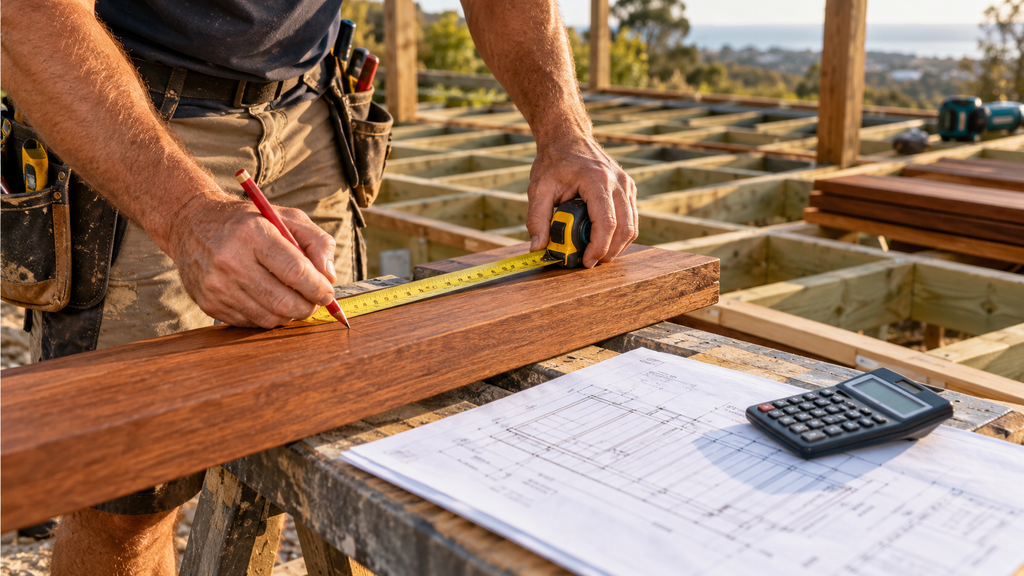
A sensible purchasing approach is necessary to control material prices without sacrificing structural integrity or aesthetic appeal. Here are five easy ways to make the most of your lumber budget:
- Plan Board Lengths to Reduce Waste: Order timber in lengths that match your structural spans or deck dimensions to minimise off-cut waste on-site.
- Match the Grade to the Application: Use structural-grade timber where strength is required, and save visual-grade hardwoods for exposed feature areas. There is no need to pay for Select Grade boards inside concealed floor structures.
- Combine Orders to Save on Delivery: Bundle your framing, sub-floor, decking, and cladding requirements into a single delivery dispatch to cut down on freight fees.
- Consider Character Grades for Feature Areas: Feature grade hardwoods showcase natural gum veins and character marks that add unique rustic charm at a lower cost per square metre.
- Open a Trade Account: If you are a licensed builder, carpenter, or developer, setting up a timber trade account with your supplier gives you access to commercial pricing, bulk volume discounts, and flexible billing terms.
Choose JVS Timber for Competitive Rates and Premium Quality
It doesn’t have to be difficult to navigate material pricing and lumber choices. To provide premium Australian hardwoods, structural pine, engineered LVL, plywood, and decking boards at extremely low costs, JVS Timber works directly with home builders, commercial contractors, landscapers, and renovators throughout Melbourne and Victoria.
Our trade specialists can review your architectural plans, calculate exact linear metre and square metre requirements, and recommend cost-effective timber species that match your structural requirements and visual expectations.
Contact the team at JVS Timber today to request a detailed quote or discuss trade account options for your upcoming project.
How do I convert linear metres to square metres when ordering decking or flooring?
To calculate the total linear metres required for a given square metre area, divide your total square metre coverage by the cover width of the timber board (in metres), then add 10% to 15% for cutting waste and trimming. For example, if you are laying 90mm wide decking boards (0.09m cover width) across a 20m² deck area, you divide 20 by 0.09, which equals approximately 222 linear metres (plus waste).
What is the main price difference between treated pine and hardwood decking?
Treated pine is a fast-growing softwood that undergoes preservative chemical treatment to resist rot and termites. It offers an affordable initial price per metre, making it popular for budget projects, but it requires regular staining or painting. Australian hardwood decking is denser, naturally resistant to decay and fire, lasts significantly longer, and features rich natural wood grain, which reflects its higher initial cost per metre.
Why does structural F17 hardwood cost more than F11 structural timber?
The F-rating (stress grade) measures the bending strength and stiffness of structural timber. Stricter grading requirements and structural stress testing are applied to F17 hardwood to make sure it can sustain large structural loads over longer spans without experiencing undue deflection. The price difference is explained by the enhanced structural capability, selection procedure, and density of lumber.
Are timber prices in Melbourne higher for custom-milled profiles?
Indeed. Because of mass production runs, standard, high-volume timber profiles that are frequently kept in nearby warehouses are reasonably priced. Custom-milled profiles raise the cost of linear meters since they necessitate the installation of specialised milling equipment, smaller production batches, and additional labour time.
How can a builder benefit from setting up a timber trade account?
Contractors and builders will appreciate tiered trade discounts, prioritised delivery scheduling, dedicated account management and consolidated billing when they establish a timber trade account. This protects the project’s profit margins, speeds up procurement, and provides consistent supply schedules for materials.
