
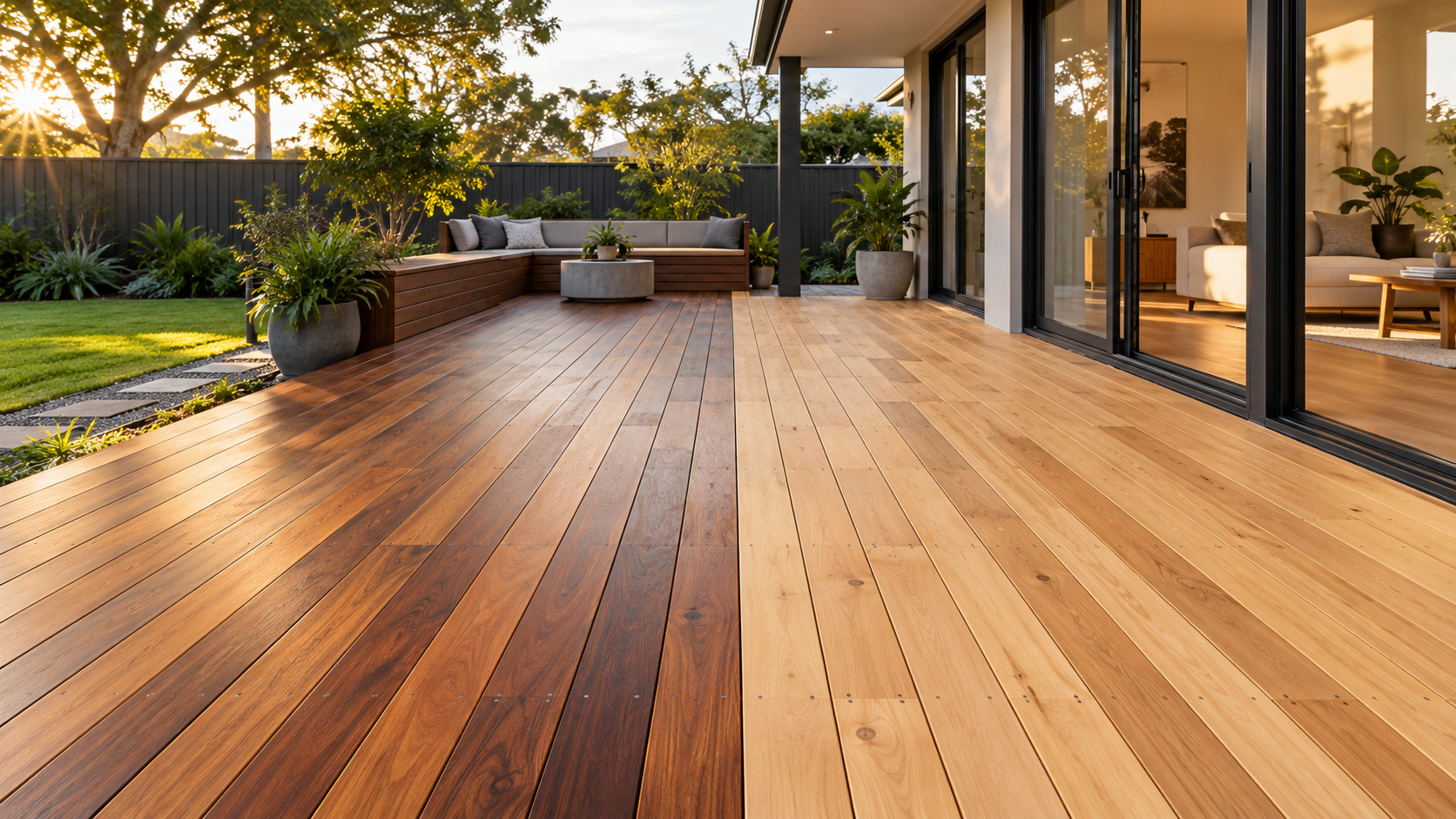
Building an outdoor deck is one of the most rewarding investments you can make for your property. An inviting timber deck creates a seamless transition between interior living areas and garden spaces, providing a dedicated zone for entertaining, relaxing, and outdoor living. However, the success and longevity of your project depend heavily on selecting the right decking material.
Australia’s native hardwoods are widely considered the gold standard for exterior construction. They are exceptionally dense, strong and weather-resistant. In terms of narrowing down the choices, there are two Australian hardwoods that always top the list of every architect and builder: Spotted Gum and Blackbutt.
Both species deliver world-class performance, but they have different looks, workability profiles, and aesthetic vibes. Ultimately, whether you go with spotted gum or blackbutt is really about understanding how each timber behaves over time and matching those characteristics to your personal design vision, budget and site requirements.
This comprehensive guide breaks down the core differences, weighs the spotted gum decking pros cons, explores the unique qualities of blackbutt decking, and helps you choose the perfect material for your next build with JVS Timber.
Overview of Premium Australian Hardwoods
Before we look at the direct head-to-head comparison, let’s look at why native Australian hardwoods are so good in outdoor environments. Dense Australian timbers, unlike softwoods and composite products, have developed to withstand harsh climatic conditions, from intense UV radiation and extreme heat to freezing rain and humidity variation.
Both Spotted Gum and Blackbutt are rated Class 1 durability timbers for above-ground use. This means both species have an expected service life of more than 40 years, if properly installed and maintained. Both timbers are naturally resistant to fungal rot and termite attack, making them ideal for structural and surface applications across Australia.
However, despite these shared structural benefits, their visual profiles and physical handling differ significantly.
Exploring Spotted Gum Decking
Spotted Gum (Corymbia maculata) is harvested along the eastern seaboard of New South Wales and Queensland. It is celebrated for its striking visual drama, rich colour palette, and remarkable structural toughness.
Visual Appearance and Grain Characteristics
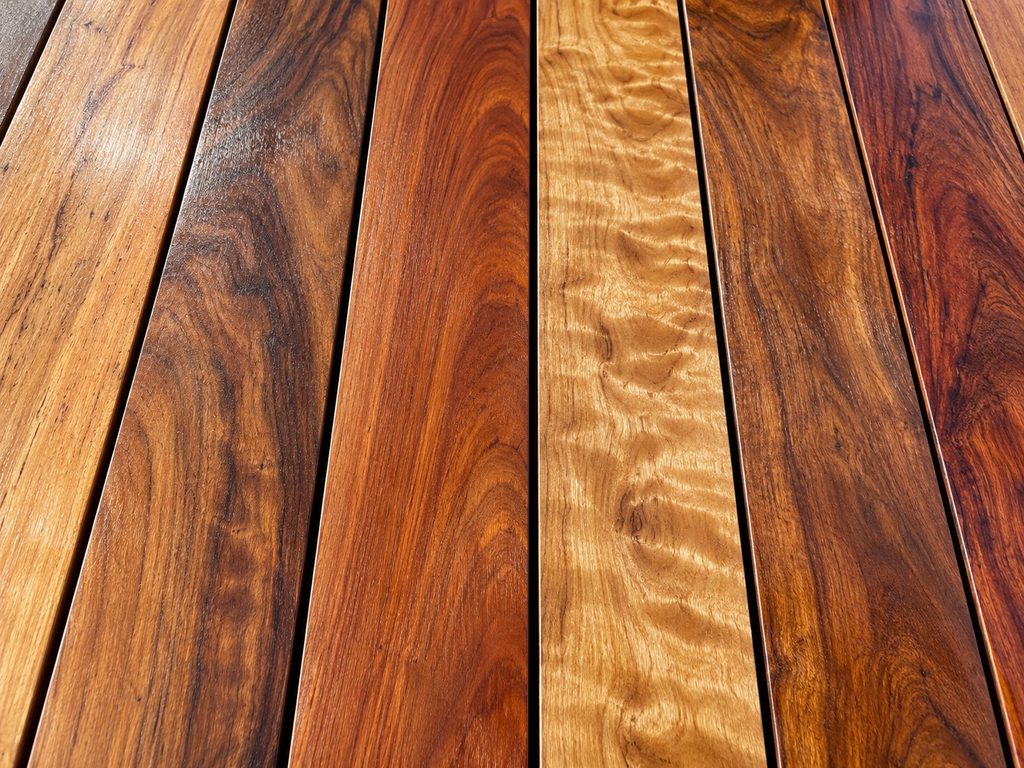
The Spotted Gum is recognised for its remarkable colour variation from board to board. In a pack of timber, you might find boards ranging from pale straw and warm golden tans to rich chocolate brown and deep reddish charcoal. The grain figure is just as distinctive, often showing wavy, interlocked lines, subtle flecks of gum-vein and a shimmering fiddleback figure. This variation is dramatic and creates a dynamic, high-character deck surface where no two boards are alike.
Physical Properties and Durability
Spotted Gum is one of the densest timbers found in Australia. Its enormous hardness makes it outstanding in its resistance to surface indentations, heavy foot traffic, dragging patio furniture and high-impact wear. Its natural oil content repels water, providing high dimensional stability and low shrinkage rates when exposed to varying humidity.
Bushfire Rating (BAL Compliance)
Spotted Gum provides an important safety benefit for projects built in outer suburban or rural bushfire-prone areas. It is inherently fire-resistant and meets the Bushfire Attack Level rating of BAL-29 as per the Australian standard AS 3959, without needing chemical flame-retardant treatments.
Spotted Gum Decking Pros and Cons
Evaluating spotted gum decking pros and cons helps determine whether this bold, heavy-duty timber aligns with your project demands.
Pros of Spotted Gum
- Striking Natural Aesthetics: The rich contrast of light and dark boards gives a luxurious, organic look that grounds modern and traditional architecture.
- Extreme Hardness: Highly resistant to denting, scratching, and surface wear, making it ideal for high-traffic entertainment areas and commercial applications.
- High Bushfire Resistance: Approved for BAL-29 building zones out of the box.
- Low Tannin Bleeding: Compared to timbers like Merbau, Spotted Gum releases fewer water-soluble tannins, reducing the risk of staining surrounding stone or concrete paved surfaces.
Cons of Spotted Gum
- Challenging Workability: Due to its extreme density, Spotted Gum is tough on saw blades and cutting tools. All fastener holes must be pre-drilled to prevent board splitting during installation.
- Significant Board Contrast: While many homeowners love board variation, those seeking a uniform, single-toned deck may find Spotted Gum’s contrast too lively.
- Prone to End-Splitting if Unsealed: Like all dense hardwoods, board cut ends must be sealed immediately on site to prevent end-checking as moisture leaves the wood grain.
Exploring Blackbutt Decking
Blackbutt (Eucalyptus pilularis) is one of the main timbers used in Australian construction and is found in abundance in the coastal forests of New South Wales and southern Queensland. Architects love Blackbutt decking for its understated elegance, and it creates a warm, bright, modern aesthetic in outdoor living areas.
Visual Appearance and Grain Characteristics
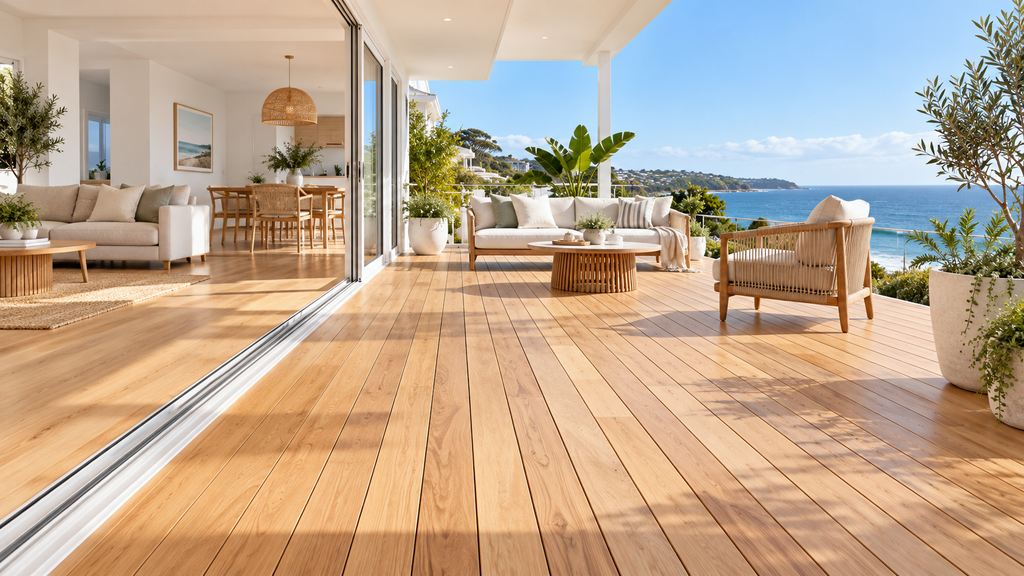
Blackbutt has a much more uniform and consistent appearance than the bold variations of Spotted Gum. Its colour palette moves from light straw and pale blonde to warm, creamy honey shades, sometimes with a touch of pink. The grain is mostly straight, clean and even, which gives larger deck areas a calm, open and spacious feel.
Physical Properties and Durability
Blackbutt is a heavy hardwood that offers excellent structural strength and durability. It is rated Durability Class 1 above ground, offering long-term resistance to decay, rot and insects. It’s a little less dense than Spotted Gum, but still incredibly tough and handles active family use with ease.
Bushfire Rating (BAL Compliance)
Like Spotted Gum, mature Blackbutt timber is naturally fire resistant. It meets BAL-29 bushfire requirements to AS 3959, and is a safe, fully compliant choice for homes built in designated fire zone locations.
Blackbutt Decking Pros and Cons
By considering the pros and cons of Blackbutt, you can decide whether it is the right option for your outdoor space.
Pros of Blackbutt
- Clean, Modern Appearance: The light, consistent blonde tones reflect sunlight, making smaller yards or covered alfresco areas feel larger and brighter.
- Excellent Workability: While still a dense hardwood, Blackbutt is easier to cut, drill, sand, and fix than Spotted Gum, saving installers time on site.
- Superior Finish Acceptance: Blackbutt’s even texture and lighter natural color allow it to absorb deck oils, stains, and tinted finishes very uniformly. It takes custom stains exceptionally well if you wish to adjust the timber tone.
- BAL-29 Certified: Complies naturally with bushfire construction standards for high-risk zones.
Cons of Blackbutt
- High Tannin Content: Blackbutt contains higher levels of natural extractives and tannins. It can bleed during early rainfall exposure, requiring proper washing and prep to avoid staining nearby light-colored masonry.
- Visible Surface Checking: Under severe, unmaintained sun exposure, Blackbutt can develop small surface hairline cracks (checking) faster than denser species if left unsealed.
- Shows Dirt and Marks Easily: Because of its lighter blonde color, dirt, footprints, and stains are more visible on an unwashed Blackbutt deck compared to darker timbers.
Direct Comparison: Spotted Gum vs Blackbutt
To make the right choice for your home, consider how these two timber giants compare across key decision factors:
1. Aesthetic Style and Interior Flow
- Spotted Gum: Ideal for designs that celebrate natural wood character, contrast and warmth. It looks stunning with stone, dark joinery, black metal frames and rustic landscape.
- Blackbutt: Ideal for minimalist, coastal, Scandinavian and contemporary modern architecture. If you have interior Blackbutt flooring in your home, extending the same species out onto the deck will create a seamless transition between the indoor and outdoor floors.
2. Hardness and Traffic Resistance
- Spotted Gum: Holds the edge in pure surface hardness. It is virtually immune to denting from high heels, heavy outdoor furniture, or active pets.
- Blackbutt: Exceptionally tough for residential use, though slightly softer than Spotted Gum. Its lighter surface means deep scratches may show slightly more easily if heavy objects are dragged across it.
3. Ease of Installation
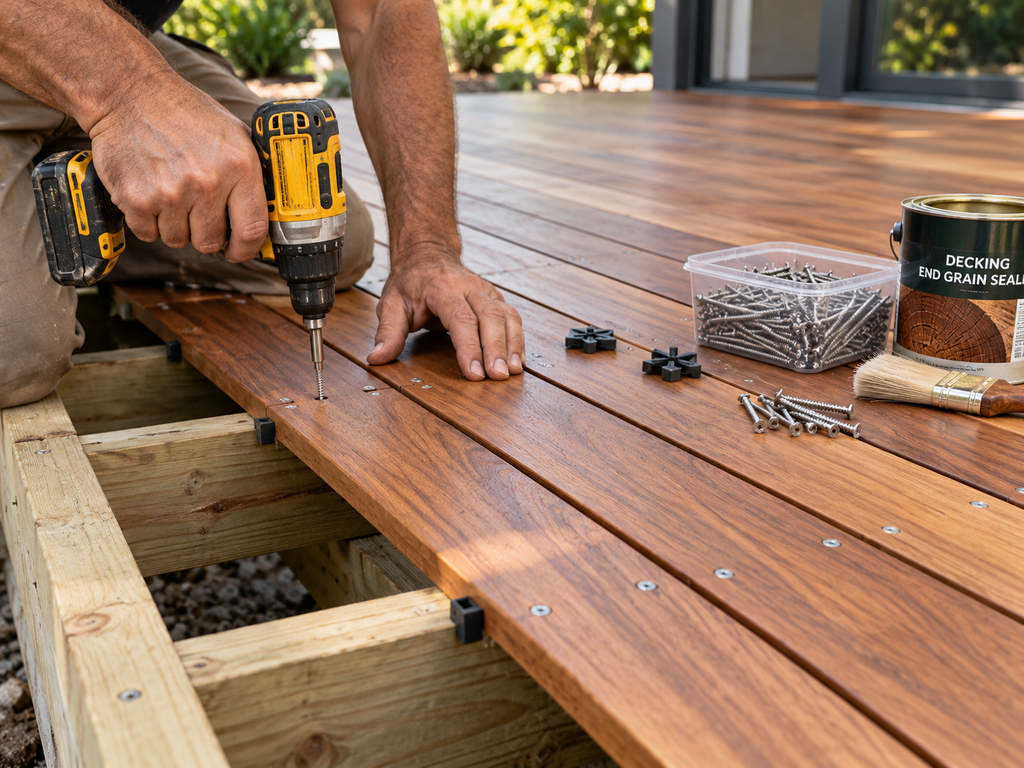
- Spotted Gum: Requires careful handling, sharp carbide saw blades, pre-drilling of every fastener hole, and stainless steel fixings to avoid board damage.
- Blackbutt: Easier on carpenter tools and fasteners, allowing for slightly faster installation while still requiring standard pre-drilling best practices.
4. Long-Term Maintenance
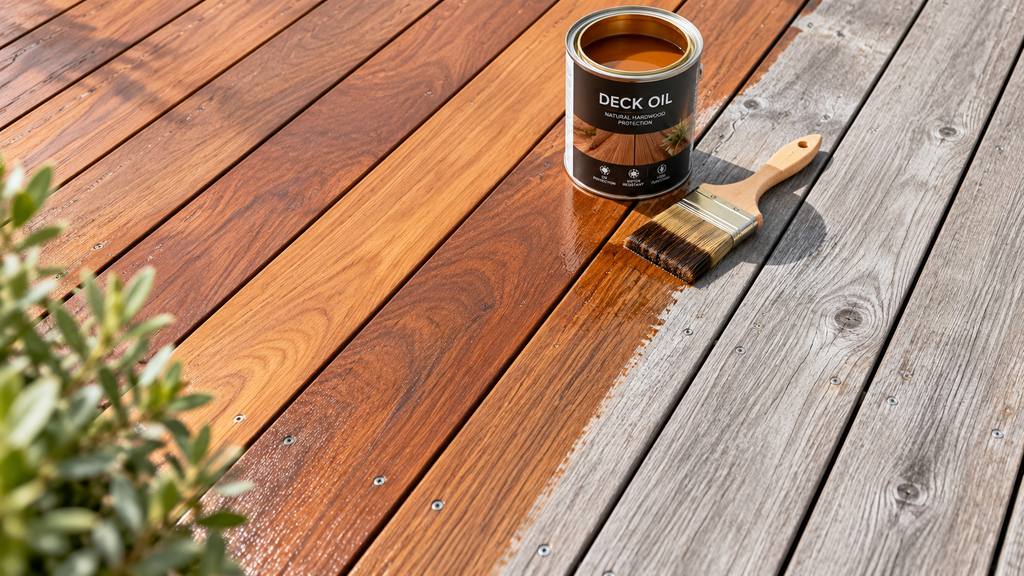
Both species require similar maintenance. When left unsealed outdoors, Spotted Gum and Blackbutt will naturally weather to a soft silver grey tone when exposed to UV. To preserve the rich natural colour, both timbers need to be treated with a high-quality penetrating oil or water-based deck finish every 12 to 18 months.
Practical Buying Tips for Your Decking Project
To ensure your timber deck performs flawlessly for decades, keep these practical installation tips in mind:
- Specify Kiln-Dried (KD) Boards: Always buy kiln-dried decking boards from JVS Timber. Kiln drying helps to stabilise the internal moisture content to avoid major board movement, warping or cupping after installation.
- Seal Board Cut Ends: Instruct your builder to apply a clear end-grain sealer or timber oil to every cut end during construction to seal open wood pores against moisture loss.
- Ensure Adequate Sub-Floor Airflow: Leave sufficient ground clearance beneath joists and maintain a minimum gap between decking boards (typically 5mm) to ensure adequate ventilation and water drainage.
- Use Stainless Steel Fixings: Secure your boards using high-grade stainless steel deck screws, especially if your property is located near coastal salt environments or swimming pools.
Find Premium Hardwood Decking at JVS Timber
Whether you prefer the dramatic color variations of Spotted Gum or the clean, blonde elegance of Blackbutt, JVS Timber supplies high-grade Australian hardwoods built to last.
We work closely with home builders, landscapers, carpenters, and DIY renovators across Australia to deliver sustainably sourced, kiln-dried decking boards direct to your job site. Our trade team can help calculate exact board quantities, recommend appropriate fixings, and provide technical guidance tailored to your building site.
Contact JVS Timber today to request a quote or discuss trade supply for your upcoming project.
Is Spotted Gum harder than Blackbutt decking?
Yes. Spotted Gum has a higher density and Janka hardness rating than Blackbutt, making it slightly more resistant to surface dents, heavy foot traffic, and mechanical wear. However, both species are classified as heavy-duty Australian hardwoods that easily handle demanding residential deck applications.
Can both Spotted Gum and Blackbutt be used in BAL-29 bushfire zones?
Yes. Both Spotted Gum and Blackbutt possess natural fire-retardant properties and are officially approved for use in designated Bushfire Attack Level (BAL) 29 areas under Australian Standard AS 3959.
Which timber leaks more tannins onto surrounding paving?
Generally, blackbutt has a higher level of water-soluble extractives and tannins that can bleed out with early exposure to rain. Spotted Gum has less natural bleeding of tannin. For both species, it is best practice to clean and wash new boards with a timber deck prep cleaner before sealing to minimise run-off onto surrounding concrete or pavers.
Will Spotted Gum and Blackbutt decking turn grey over time?
Yes. If left untreated and unsealed, sunlight (UV rays) and weather exposure will cause both Spotted Gum and Blackbutt to weather naturally to a soft silver-grey patina over time. To retain the original natural wood colors, you must apply and maintain a quality penetrating deck oil or coating regularly.
Can I stain Blackbutt decking to match a darker timber color?
Yes. Because Blackbutt features a light blonde, uniform surface with clean grain, it absorbs tinted oils and timber stains very evenly. This makes it an exceptionally versatile choice if you want to apply a custom stain or achieve a specific warm timber tone.
