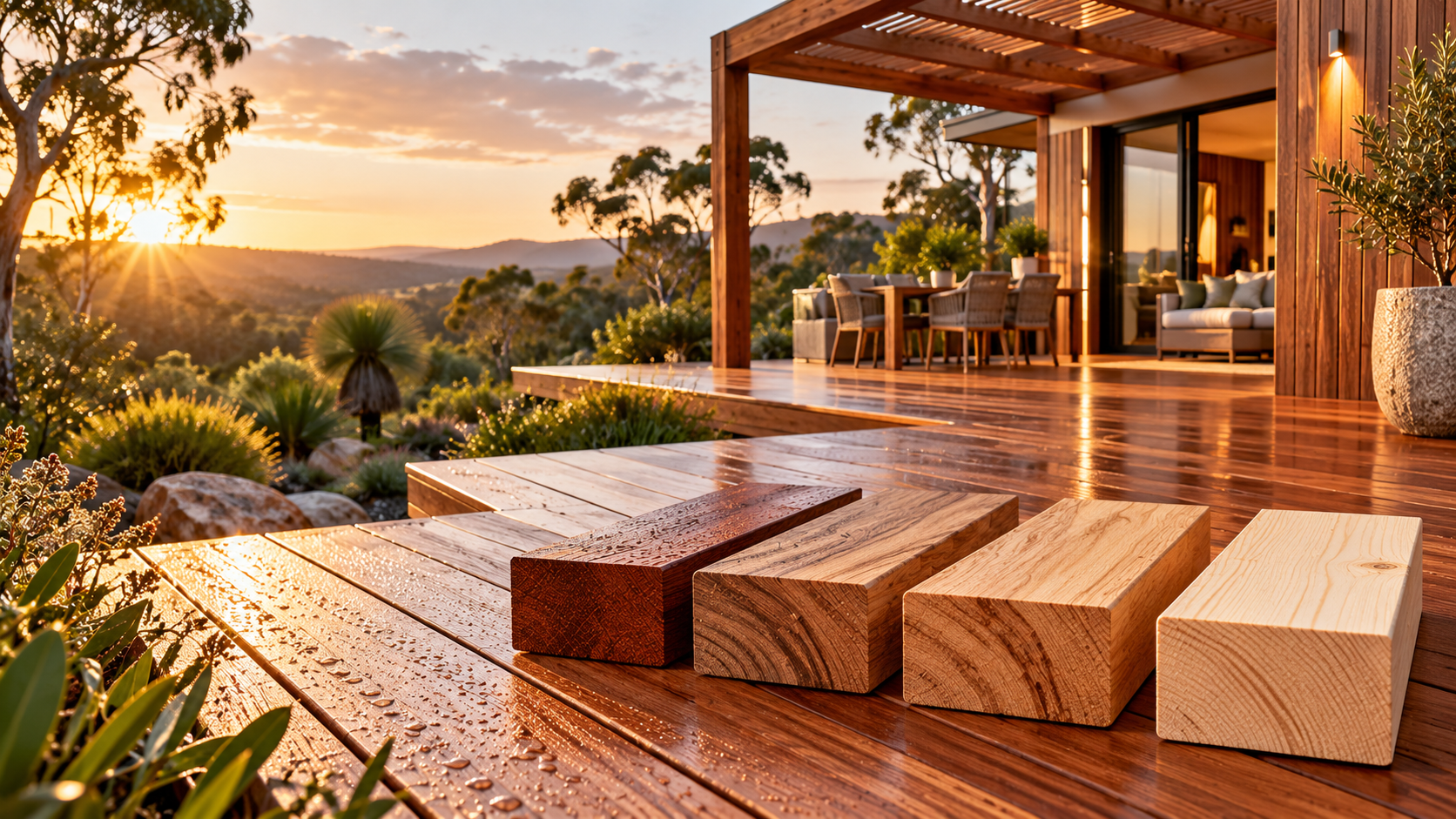
Whether it’s residential builds, architectural cladding projects or outdoor decking areas, choosing the right species is more than just about colour and grain. If you want to achieve structural integrity and longevity, you need to select materials that are naturally resistant to decay, termites and exposure to weather.
In Australia, this performance measure is regulated by AS 5604 (Timber – Natural Durability Ratings), which classifies species into different classification levels. Timber durability classes assist building owners, architects and builders to select the right timber for any given project and avoid costly future repairs.
What Is a Timber Durability Class?
A timber durability class rates a species’ natural ability to resist fungal rot, decay, and insect attack without receiving chemical preservative treatments.
A common misconception is that durability is determined by how hard or dense a piece of wood feels. While many dense hardwoods are highly durable, the rating is actually driven by natural chemical extractives (such as resins, oils, and tannins) stored within the heartwood.
Key Rules of Natural Durability Ratings:
- Heartwood Only: Durability classes apply strictly to the mature heartwood (the inner core of the log).
- Sapwood Is Class 4: The outer ring of the log (sapwood) contains starch and sugars that attract pests and fungi. Regardless of species—even Ironbark—untreated sapwood is always classified as Class 4 (non-durable).
- Two Distinct Environments: A single species often carries separate ratings for above-ground timber and in-ground timber applications.
The Four Australian Timber Durability Classes
Standard AS 5604 categorises heartwood into four primary classes based on estimated service life expectations.
Class 1: Highly Durable (25+ Years In-Ground / 40+ Years Above-Ground)
In terms of natural protection, Class 1 is the top standard. These species are perfect for exposure to extreme weather, ground contact, and structural loads since they have significant concentrations of natural extractives.
- Expected Lifespan: 25+ years in-ground; 40+ years above-ground.
- Popular Species: Red Ironbark, Grey Ironbark, Tallowwood, Turpentine, Spotted Gum (above-ground).
- Primary Uses: Heavy-duty structural hardwood, bridge timber, wharf piles, and premium hardwood decking.
Class 2: Durable (15–25 Years In-Ground / 15–40 Years Above-Ground)
Class 2 timbers deliver exceptional performance in weather-exposed environments and offer high resistance to decay and termites.
- Expected Lifespan: 15–25 years in-ground; 15–40 years above-ground.
- Popular Species: Blackbutt, Spotted Gum (in-ground), Jarrah, River Red Gum, Cypress Pine.
- Primary Uses: Residential decks, architectural cladding, pergolas, screening, and joists.
Class 3: Moderately Durable (5–15 Years In-Ground / 7–15 Years Above-Ground)
Class 3 species perform well in protected outdoor settings or well-drained above-ground applications, but they require proper detailing and surface sealers to reach maximum service life.
- Expected Lifespan: 5–15 years in-ground; 7–15 years above-ground.
- Popular Species: Sydney Blue Gum, Silvertop Ash, Brush Box, Messmate, Merbau/Kwila.
- Primary Uses: Protected exterior linings, window frames, furniture, and decorative screens.
Class 4: Non-Durable (0–5 Years In-Ground / 0–7 Years Above-Ground)
Class 4 timber possesses minimal natural resistance to rot or insects. Untreated Class 4 materials fail rapidly when exposed to rain or damp soil.
- Expected Lifespan: Less than 5 years in-ground; less than 7 years above-ground.
- Popular Species: Radiata Pine, Victorian Ash, Tasmanian Oak, Douglas Fir (Oregon).
- Primary Uses: Internal framing, moldings, interior hardwood flooring (protected environments), or outdoor use only when pressure-treated.
In-Ground vs. Above-Ground Exposure
Depending on where it is put, a species may have varying durability ratings. Timber exposed to soil microorganisms, active termites, and continuous dampness is known as soil contact. Airflow and drying cycles help above-ground treatments prolong the life of the wood.
For example:
- Spotted Gum: Rates as Class 1 above-ground (40+ years), but drops to Class 2 in-ground (15–25 years).
- White Cypress: Holds a Class 1 rating above-ground, but behaves as Class 2 in-ground.
How Hazard Levels (H-Ratings) Interact with Durability
The natural durability is in the heartwood that is not treated, but the chemicals that preserve the softer, Class 4 species can be used safely outside. The level of preservative treatment is expressed in Hazard Classes (H1 to H6):
- H1 – H2: Protected indoor applications (termite-resistant framing pine).
- H3 Timber Treatment: Exterior, above-ground applications exposed to weather (e.g., treated pine decking, fascia boards).
- H4 – H5: In-ground contact, structural posts, and retaining walls.
- H6: Marine waters and prolonged immersion.
A Class 4 softwood like Radiata Pine, when treated with an H3 timber treatment, can match or exceed the outdoor above-ground performance of a Class 2 untreated hardwood.
Matching Australian Timber Species to Common Applications
These suggestions of species matches can help you define the building materials accurately for your project:
1. Outdoor Hardwood Decking & Boardwalks
Exposed decking requires resistance to UV radiation, water ponding, and high foot traffic.
- Recommended: Spotted Gum, Blackbutt, Ironbark, Merbau.
- Minimum Rating: Class 1 or Class 2 above-ground.
2. Fence Posts, House Stumps & Retaining Walls
Elements set directly into damp soil face severe biological hazards.
- Recommended: Grey Ironbark, Cypress Pine, H4/H5 Pressure-Treated Softwood.
- Minimum Rating: Class 1 or Class 2 in-ground.
3. Interior Flooring & Architectural Joinery
Indoor applications are sheltered from direct rainfall and extreme weather.
- Recommended: Tasmanian Oak, Blackbutt, Spotted Gum, Jarrah.
- Minimum Rating: Class 3 or Class 4 is acceptable for internal dry use.
4. Bushfire Attack Level (BAL) Compliance
Choosing fire-resistant hardwoods naturally is necessary if your project is situated in an AS 3959-designated bushfire zone.
- Recommended: Spotted Gum, Blackbutt, Red Ironbark, Silvertop Ash.
- Compliance: Meets BAL-29 timber construction standards without additional chemical coatings.
Best Practices to Extend Timber Service Life
Even a Class 1 hardwood can fail prematurely if installed poorly. Follow these best practices to get the longest service life out of your timber building supplies:
- Provide Ventilation: Ensure sub-floor gaps under decks allow cross-flow air movement to dry out trapped moisture underneath.
- Promote Water Drainage: Design joists, handrails, and cladding boards with pitched surfaces to prevent water from pooling on wood surfaces.
- Seal End Grains: Apply a protective end-grain sealant or timber oil during installation to prevent end-splitting and capillary moisture draw.
- Regular Maintenance: Apply a quality penetrating oil every 12 to 18 months to protect against UV greying and surface micro-checking.
What is the difference between a durability class and a Janka hardness rating?
A durability class measures how well timber heartwood resists fungal decay, rot, and termite attack. A Janka hardness rating measures physical resistance to indentations, scratches, and mechanical wear. While many Class 1 hardwoods are also physically hard, durability is chemical, whereas Janka rating is physical.
Does timber durability apply to sapwood?
No. Durability ratings apply strictly to mature heartwood. The sapwood ( outer ring) of every timber species—including Ironbark—is considered Class 4 (non-durable) and will rot quickly unless treated or removed.
Can a Class 4 timber be used outdoors?
Yes, but only if it has received an appropriate chemical preservative treatment, such as an H3 timber treatment for above-ground use or H4/H5 for ground contact. Untreated Class 4 timbers will fail within a few years if exposed to wet weather.
Which Australian hardwood species has the highest durability class?
Among the Australian species with the highest ratings are Grey Ironbark, Red Ironbark and Tallowwood. Both in-ground and above-ground applications receive Class 1 ratings.
Why does the same timber species have different above-ground and in-ground ratings?
In-ground environments subject timber to constant soil moisture, fungal activity, and oxygen-deprived conditions that break down wood fibers much faster than air-exposed setups. Above-ground timber goes through wet-and-dry cycles, allowing the wood to dry out between rain events and significantly extending its service life.
